

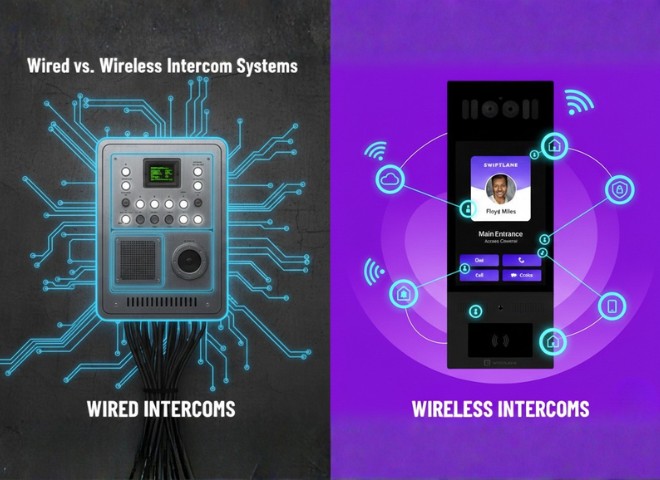
When it comes to securing and managing access to your property in Los Angeles, one question many homeowners and business owners wrestle with is this: should I go with a wired intercom system or a wireless one? It may seem like a small detail, but the choice truly affects daily convenience, long‑term reliability, maintenance, and even your property value.
Los Angeles properties come in all shapes and sizes: historic homes in Pasadena, modern condos in Downtown LA, wide‑open office spaces in the Valley, and mixed‑use buildings in Hollywood. Each setup has its own intercom needs, and what works for one space might not be ideal for another.
Let’s face it, whether you’re screening deliveries, granting entry to guests, or monitoring common areas, your intercom system becomes part of everyday life. Understanding the difference between wired and wireless options can save you time, money, and frustration.
What Are Wired Intercom Systems?
Wired intercom systems use physical cables to connect all components door panels, indoor stations, entry controls, and sometimes cameras. Think of it like the backbone of your property’s communication network: solid, direct, and not dependent on Wi‑Fi.
Properties with structured cabling like office towers, multi‑story homes, or buildings undergoing renovation often benefit from wired setups. The system is hard‑wired into the infrastructure, meaning fewer signal dropouts and typically less interference.
Wired intercoms also tend to offer:
- Consistent performance regardless of wireless congestion
- Stronger security (harder to tap digitally)
- Integration with other wired systems like security cameras or access control
The downside? Installation can be more involved and costly, especially if you’re retrofitting an older property that wasn’t pre‑wired for communications systems. Walls might need to be opened, or conduits installed labor that adds up fast.
What Are Wireless Intercom Systems?
Wireless intercom systems don’t use physical cabling between devices. Instead, they rely on Wi‑Fi or dedicated wireless protocols to connect door stations to indoor units or mobile apps on your phone. This means no drilling through walls or running long cables around the property.
For many Los Angeles properties especially apartments, rentals, or spaces where drilling isn’t practical this flexibility is a major advantage. Wireless systems are generally easier and quicker to install, scalable, and often integrate seamlessly with smartphones. Some even let you unlock doors remotely right from your phone.
Wireless intercoms typically offer:
- Easy installation with minimal wiring
- Smartphone connectivity and remote access
- Flexibility if you move frequently or change layouts
But they’re not perfect. Wireless systems depend on network strength and signal stability. In high‑density areas of Los Angeles with crowded Wi‑Fi signals, you might experience occasional lag, dropouts, or interference. And in rare cases, security concerns arise if the network isn’t properly configured or encrypted.
Wired vs. Wireless Intercom Systems: What Works Best?
By now you might be wondering, which one wins? The honest answer: it depends on your property and how you use the system. Let’s break it down in practical terms.
Best for Reliability and High‑Traffic Properties
If your property sees frequent visitors, deliveries, or needs to support multiple entry points like a large office, multi‑unit building, or gated community wired systems often outperform wireless. Their stable connection and integration with existing infrastructure make them ideal for heavy usage, long‑term durability, and advanced security integration.
Best for Flexibility and Ease of Installation
For smaller homes, apartments, or rentals especially those that can’t accommodate extensive cabling wireless intercom systems are a fantastic fit. They’re easier to install, less disruptive to the property, and often more cost‑effective up front.
Wireless setups can also be a smart choice if you want mobile access, letting you answer your intercom or unlock gates right from your smartphone while you’re at work or on the go.
Best for Security Integration
If your property already has a security network, perhaps video security cameras, access control, or alarm systems you’ll want your intercom to integrate smoothly. Wired intercom systems tend to play nicer in these environments because they can communicate directly with other wired security infrastructure without relying on network bridges.
That said, there are now hybrid systems that combine wireless convenience with enterprise‑grade security features, giving property owners the best of both worlds. These systems often work with secure cloud back‑ends, encrypted connections, and mobile apps tailored for Los Angeles businesses and residences.
Cost Considerations
Here’s where many property owners pause: up‑front cost vs. long‑term value.
- Wired systems usually cost more to install due to labor and materials, but they often have lower maintenance costs over time and fewer signal issues.
- Wireless systems are typically cheaper up front, easier to scale, and reduce installation headaches, but might require more frequent updates or upgrades especially if your Wi‑Fi network changes.
If you’re considering an upgrade or are unsure what fits your property, consulting a professional for a site assessment can make the decision much clearer.
Final Thoughts
Choosing between wired vs. wireless intercom systems doesn’t need to be overwhelming. Start by asking yourself:
- What kind of property do I have?
- How many access points do I need to cover?
- Do I want remote access from my phone?
- Will this system grow with my needs?
For many Los Angeles properties from small homes to complex commercial spaces a tailored solution that fits exactly what you use every day is the way to go. Whether you choose a wired system for rock‑solid reliability or a wireless setup for flexibility and simplicity, the right intercom enhances both convenience and security.
At FDS Security Cameras, we help property owners evaluate all these factors and recommend intercom solutions that make sense, no guesswork, no overselling. If you’re ready to upgrade your property’s communication and access experience, we can help you figure out what works best for you.
Conclusion
Choosing the right intercom system wired or wireless is less about “which is better” and more about what fits your property and your lifestyle. Los Angeles properties vary greatly, and so do their needs. By understanding the strengths and limitations of each option, you can make a smarter decision that enhances security, convenience, and long‑term value.
Last Note: Don’t rush the decision. A well‑chosen intercom system becomes part of how your property functions every day. It’s worth getting it right.